Advocacy resources. Education. Free to use.
Evidence-based breakdowns on cannabis policy, history, and science — cited, shareable, and built to move.
They named it "reefer" to make you afraid. RFER is a four-pillar policy framework — a clear path from 90 years of manufactured stigma to evidence-based federal regulation.
What the Phone Started
Teen mental health started breaking before a single state legalized cannabis. The data points to a different culprit — one with an algorithm, not a root system. A state-level analysis of what the research actually shows.
The FOMO Pipeline
How social media's fear of missing out is shaping the cannabis conversation and what it means for mental health.
Two Hours to Dispense Medicine
Pennsylvania has 440,000 registered medical cannabis patients and 185 dispensaries. The pharmacists dispensing their medicine received two hours of training — if that. Here's what the training gap looks like, and what closing it requires.
Same Plant. Same State. Two Sets of Rules.
A medical cannabis product clears more than a dozen regulatory checkpoints. A hemp-derived THC gummy at a gas station clears zero.
What the Phone Started
Teen mental health started breaking before a single state legalized cannabis. The data points to a different culprit — one with an algorithm, not a root system.
The FOMO Pipeline
Social media platforms are designed to keep you engaged, often at the expense of your mental health. This is the FOMO pipeline — a system that exploits your fear of missing out to drive addiction and anxiety.
RFER — The Deep Dive
They named it "reefer" to make you afraid. RFER is a four-pillar policy framework built from that origin story — a clear path from 90 years of manufactured stigma to evidence-based regulation.
Two Hours to Dispense Medicine
Pennsylvania has 440,000 registered medical cannabis patients and 185 dispensaries. The people dispensing their medicine received two hours of training — if that.
The Restlessness No One Names
Akathisia is a drug-induced movement disorder — unbearable inner restlessness. CBD's pharmacology may offer what pharmaceutical alternatives can't.
Every mammal has this system. Almost no one was taught it.
The endocannabinoid system regulates pain, mood, memory, appetite, and immune response. It was discovered in 1992. It's absent from 91% of medical school curricula.
One Man. 28 Papers. 87 Years of Stigma.
The stigma was manufactured in a newsroom to protect a timber fortune. The story of how yellow journalism became federal drug policy.
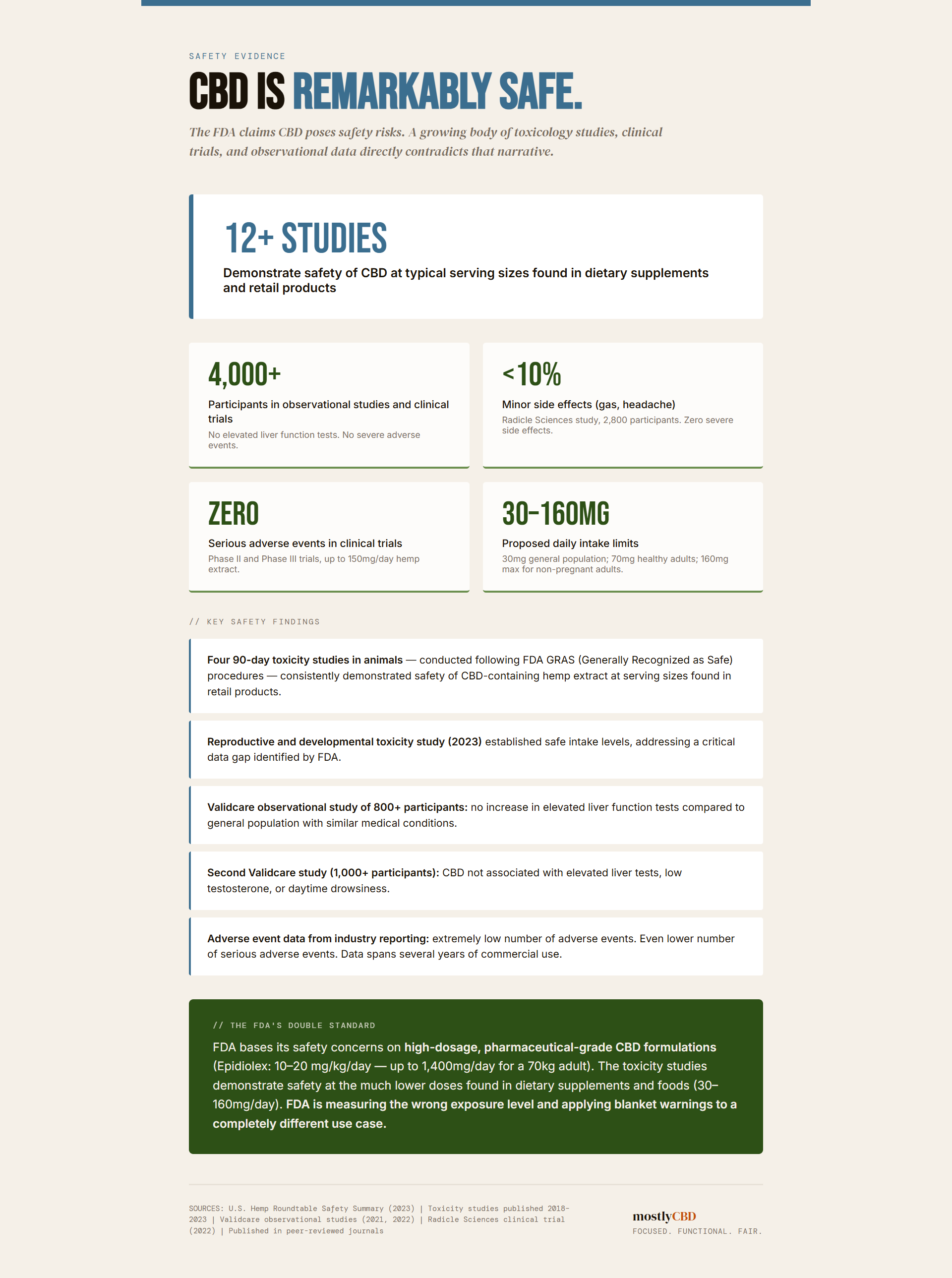
Safety data from over 4,000 participants shows no association with elevated liver tests or daytime drowsiness. The clinical evidence supports a strong safety profile for functional use.
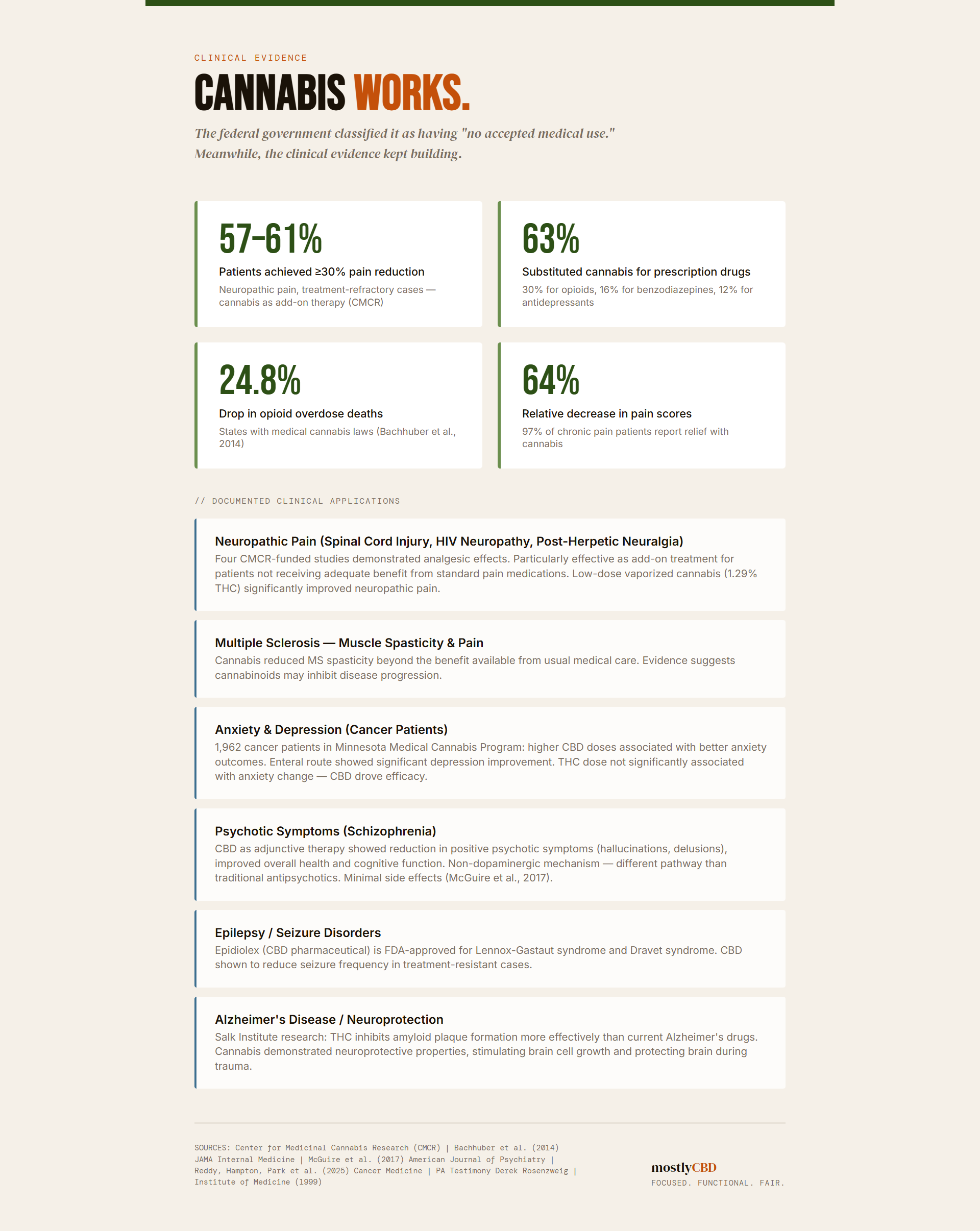
Despite a decades-long federal research blockade, the clinical evidence is clear: cannabinoids have real, measurable therapeutic applications for pain, anxiety, and neurodegenerative conditions.
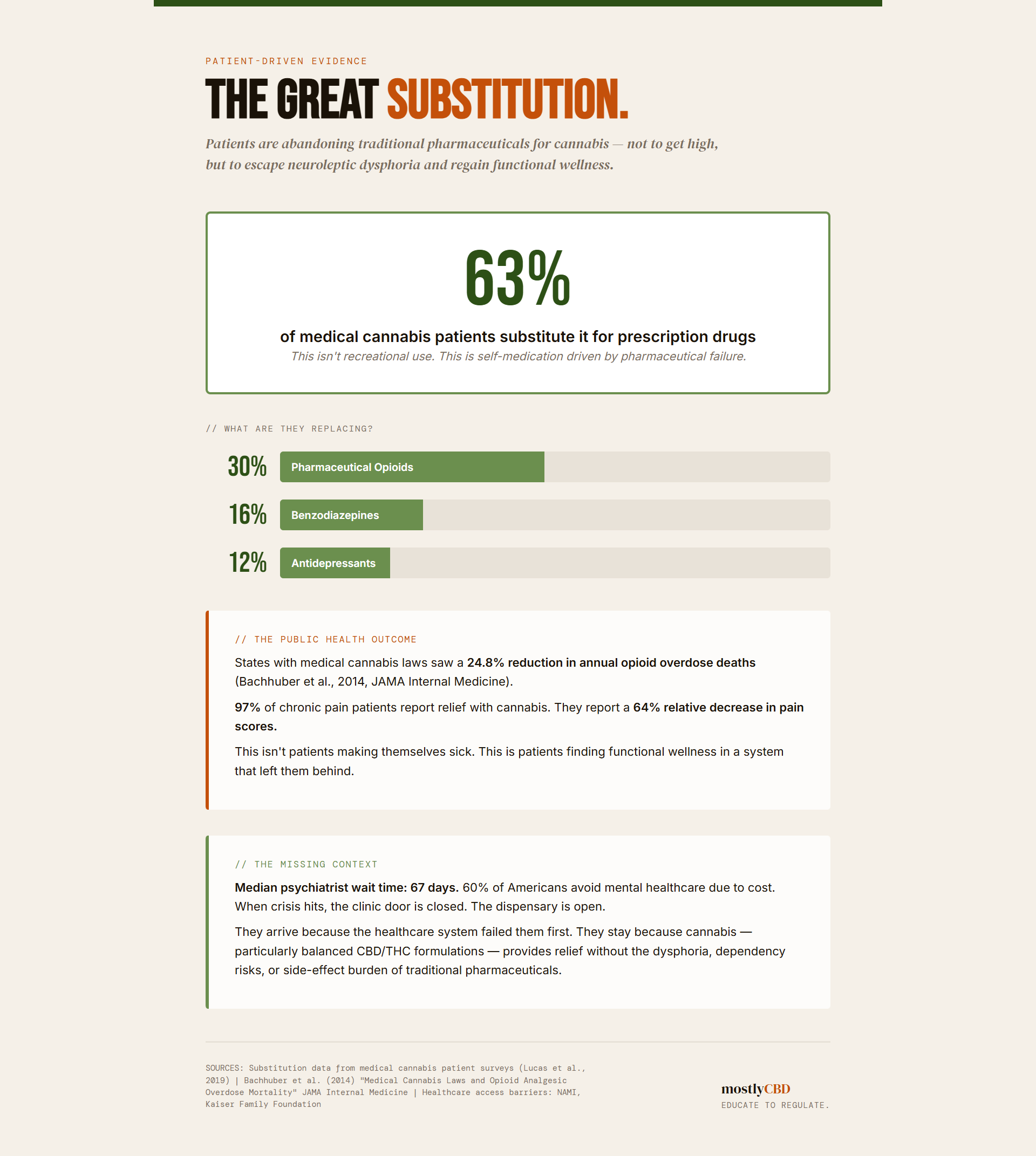
63% of medical cannabis patients substitute it for prescription drugs — including a 30% substitution rate for opioids. When patients get access, they choose the plant.
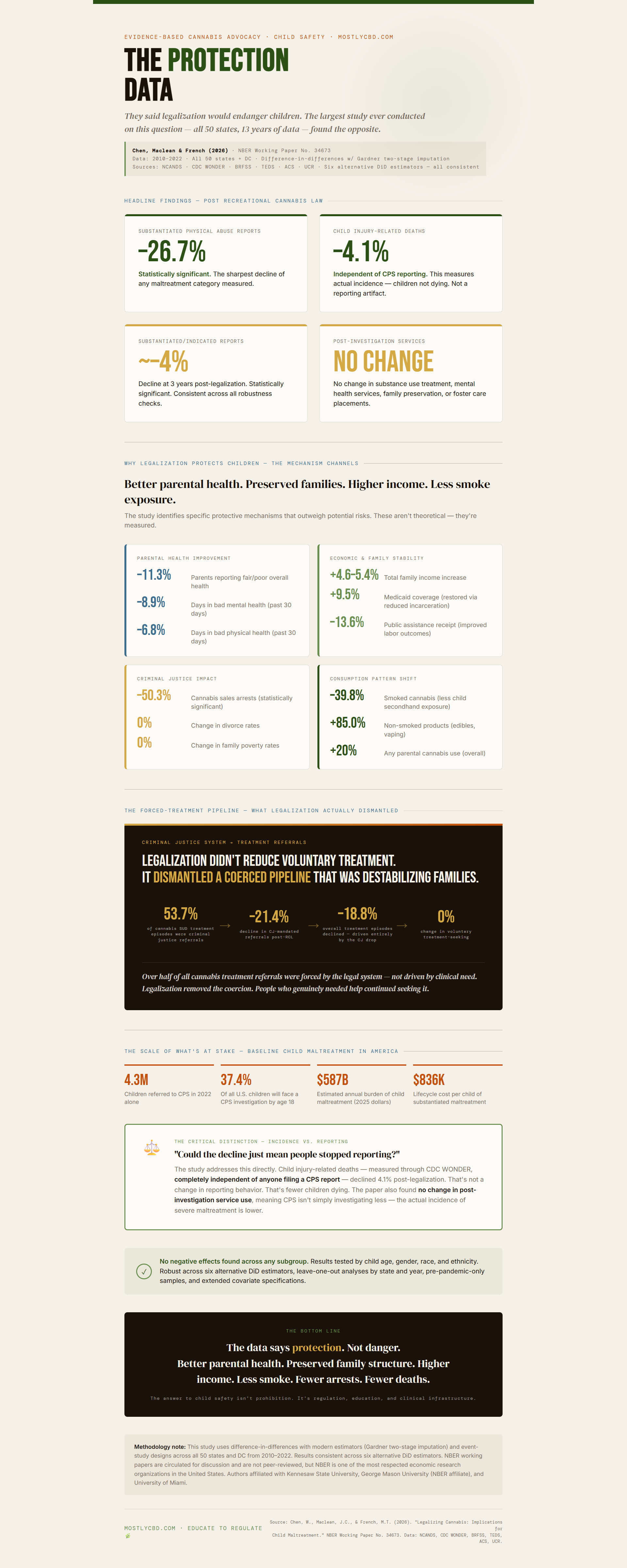
The largest study ever conducted on cannabis legalization and child safety — all 50 states, 13 years of data — found the opposite of what prohibition advocates claimed. Physical abuse reports dropped 26.7%. Child injury deaths declined 4.1%. Better parental health. Higher income. Preserved families. The data says protection, not danger.
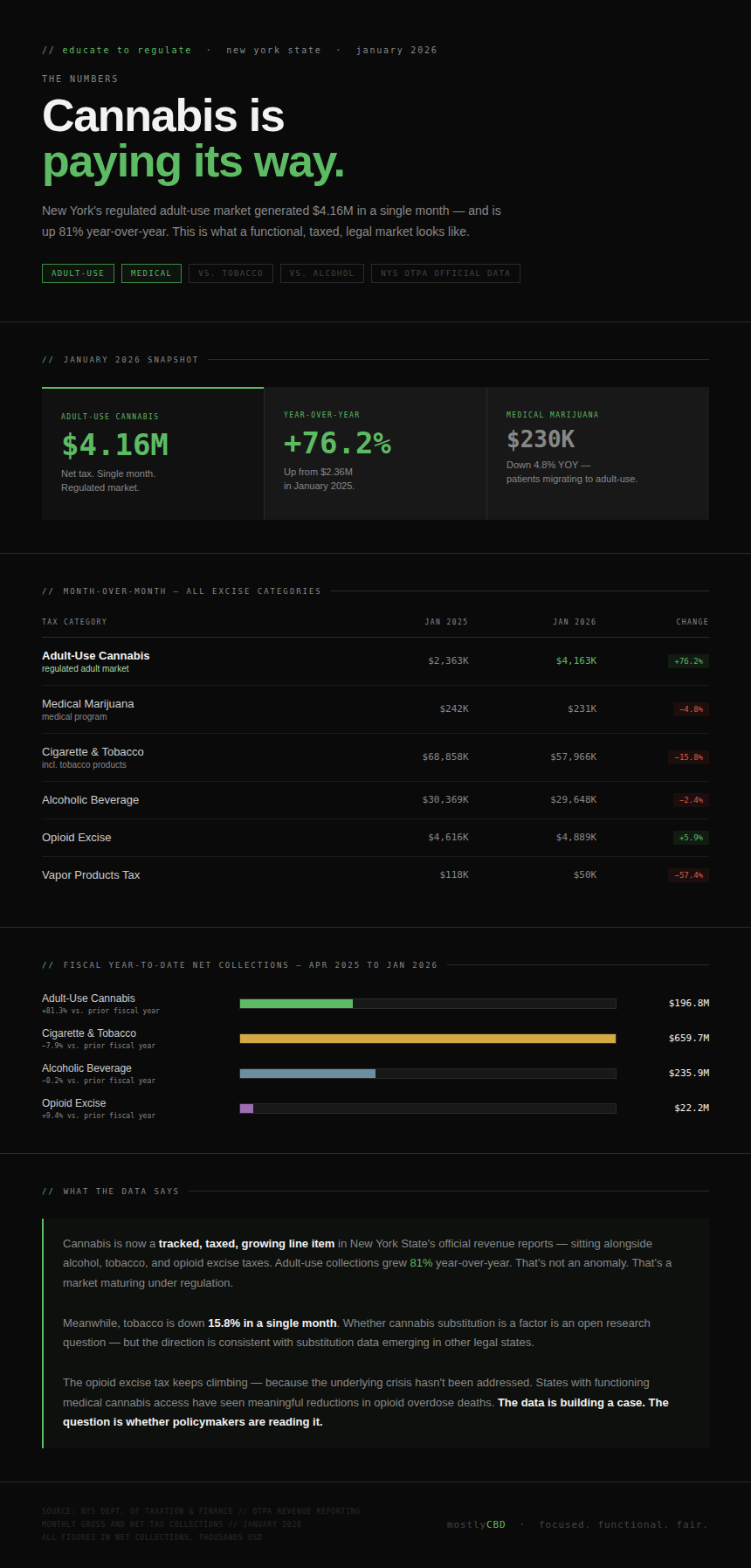
New York's regulated adult-use cannabis market generated $4.16M in net tax revenue in a single month — up 81% year-over-year. It now sits as a tracked line item alongside alcohol, tobacco, and opioid excise in official state revenue reports. Tobacco is down 15.8% in the same period. The opioid excise keeps climbing. The data is building a case. The question is whether policymakers are reading it.
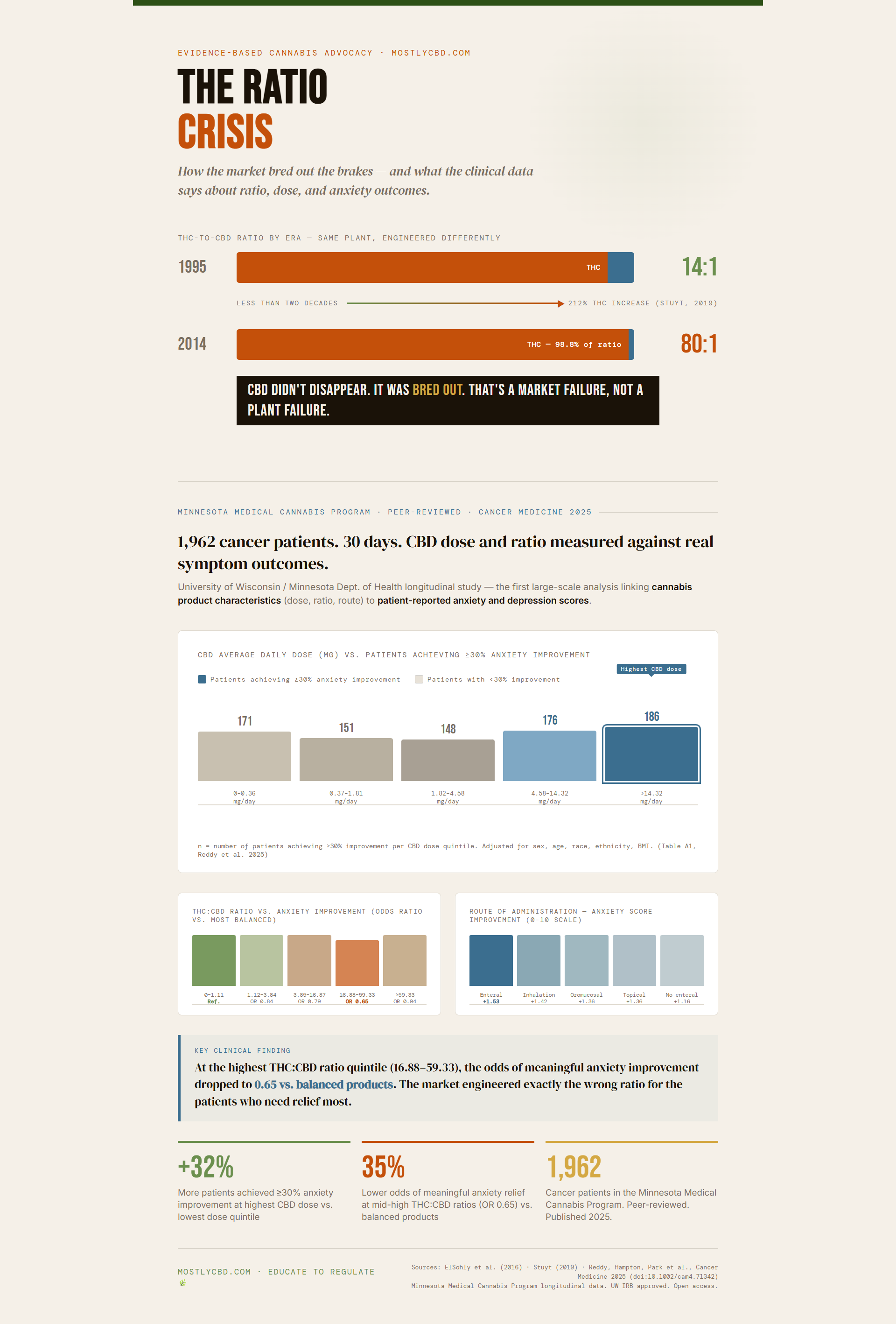
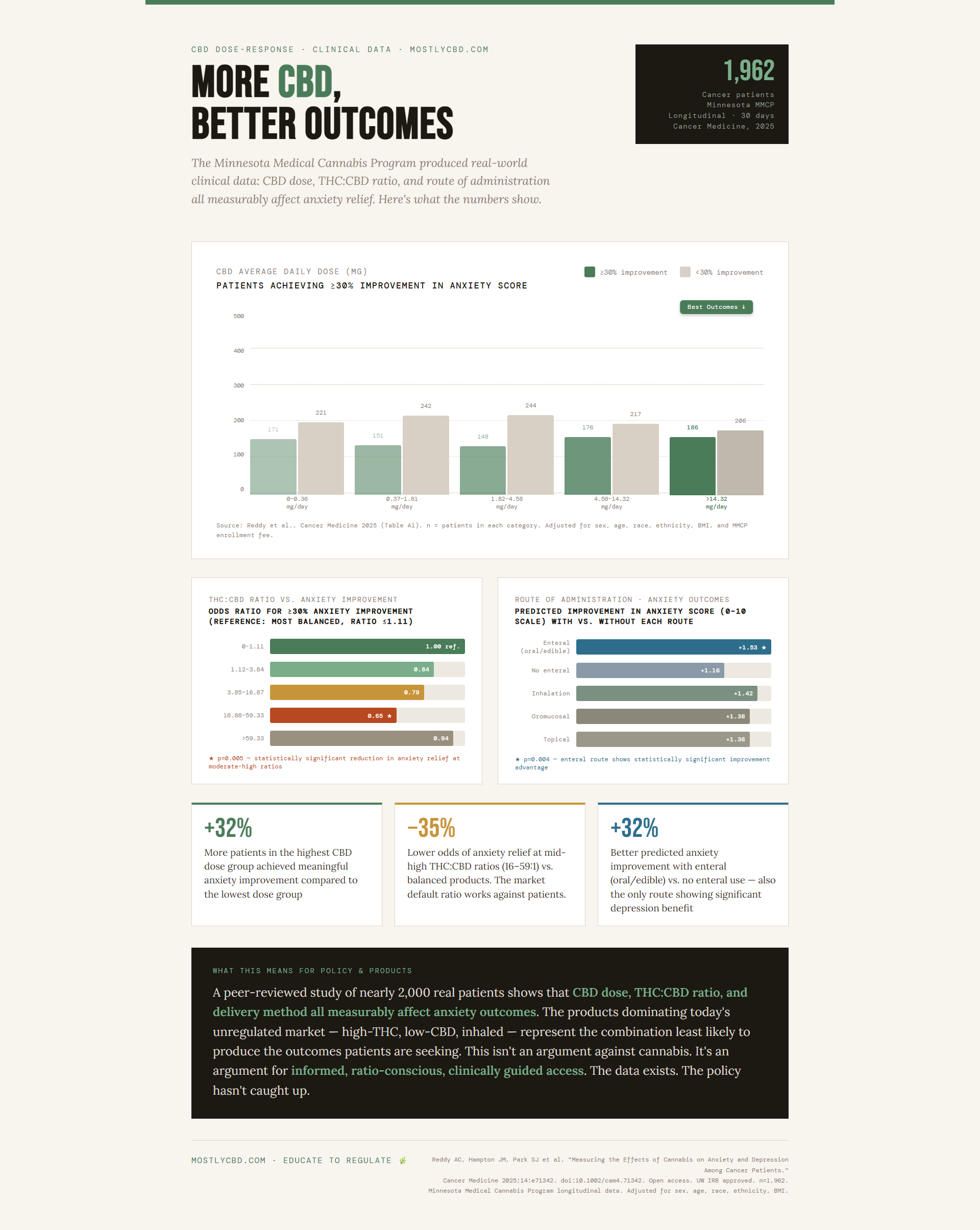
The traditional cannabis plant had a THC-to-CBD ratio near 14:1. Modern commercial products have pushed that past 80:1. Backed by 1,962-patient Minnesota peer-reviewed data (Cancer Medicine, 2025) — the first large-scale analysis linking product characteristics to patient-reported anxiety outcomes.
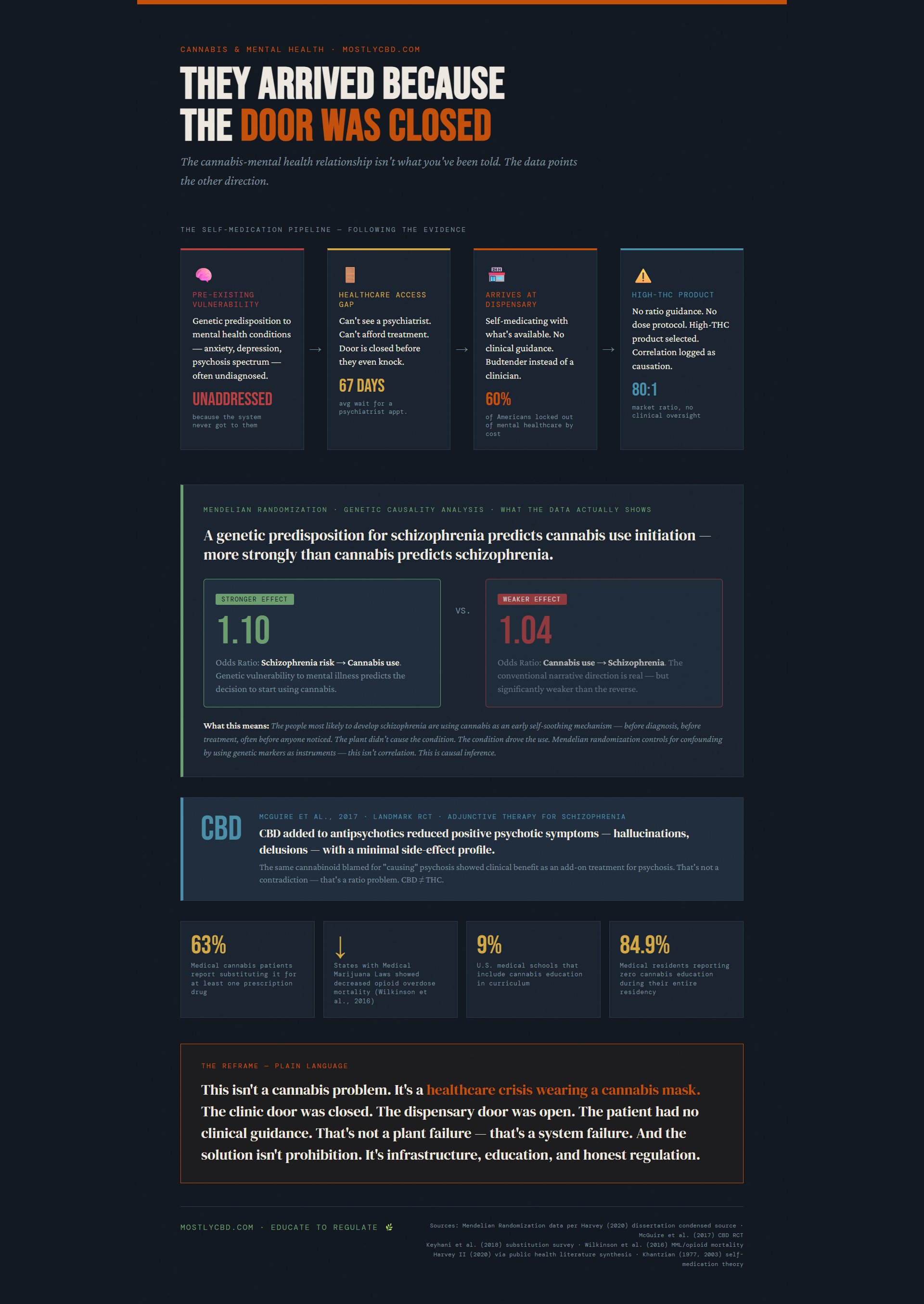
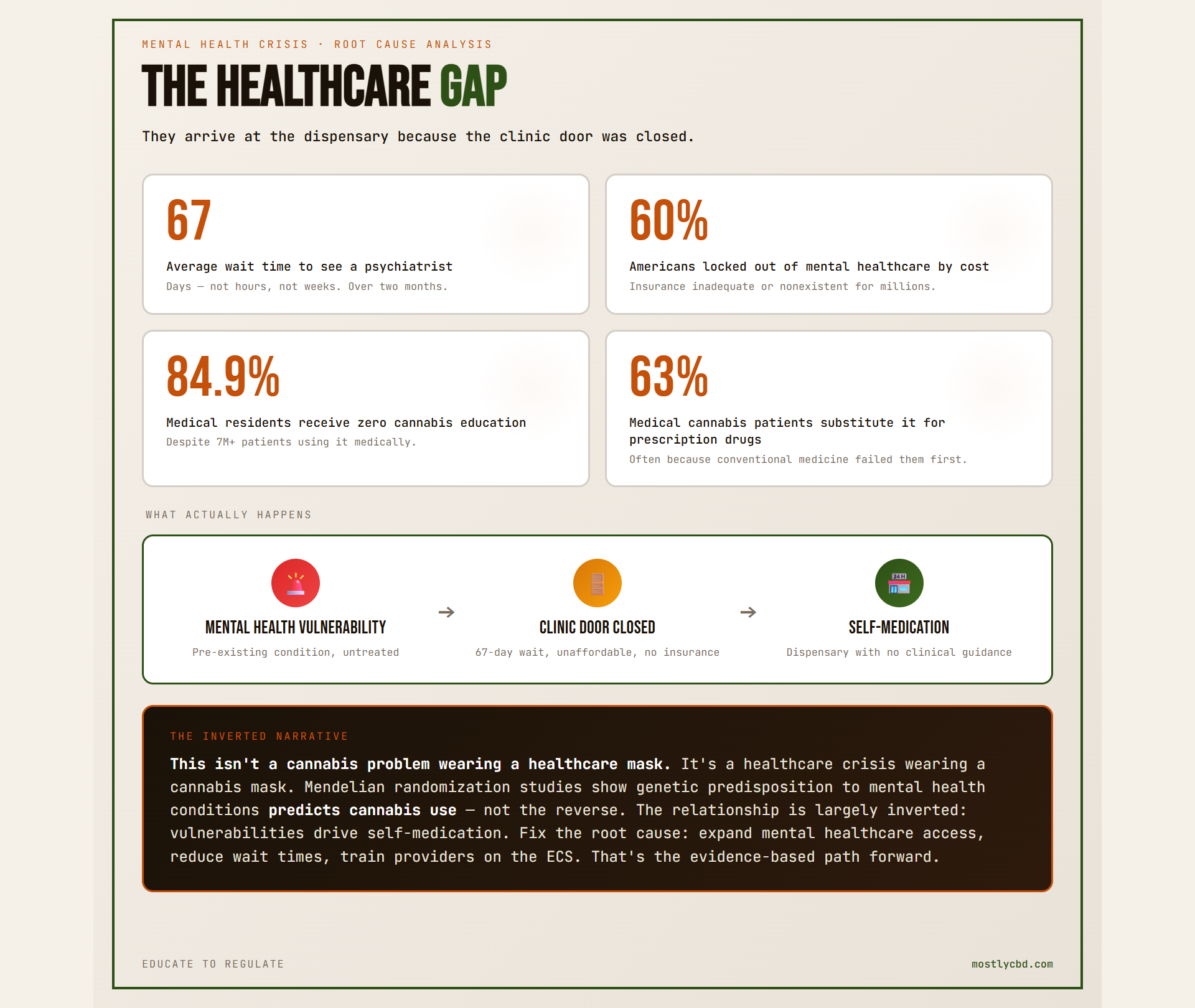
The cannabis-mental health link runs the other direction. Mendelian randomization data shows genetic vulnerability to schizophrenia predicts cannabis use — more strongly than cannabis predicts schizophrenia. People arrived at the dispensary because the clinic door was already closed: 67-day psychiatrist waits, 60% locked out by cost, no clinical guidance on the other side. That's not a cannabis problem. That's a healthcare crisis wearing a cannabis mask.
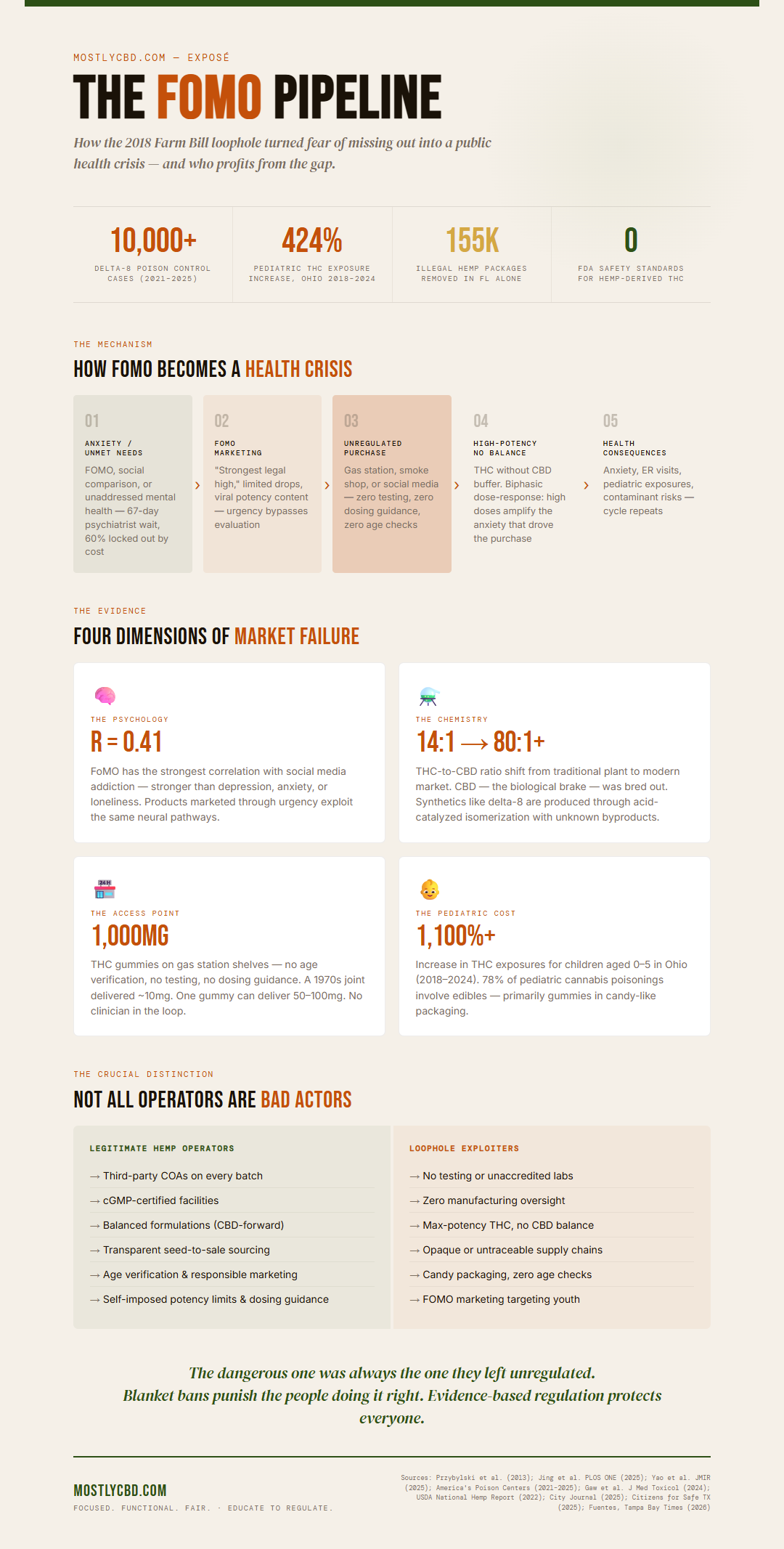
The 2018 Farm Bill created the largest unregulated cannabinoid market in American history. The industry uses scarcity marketing and FOMO to target young adults.
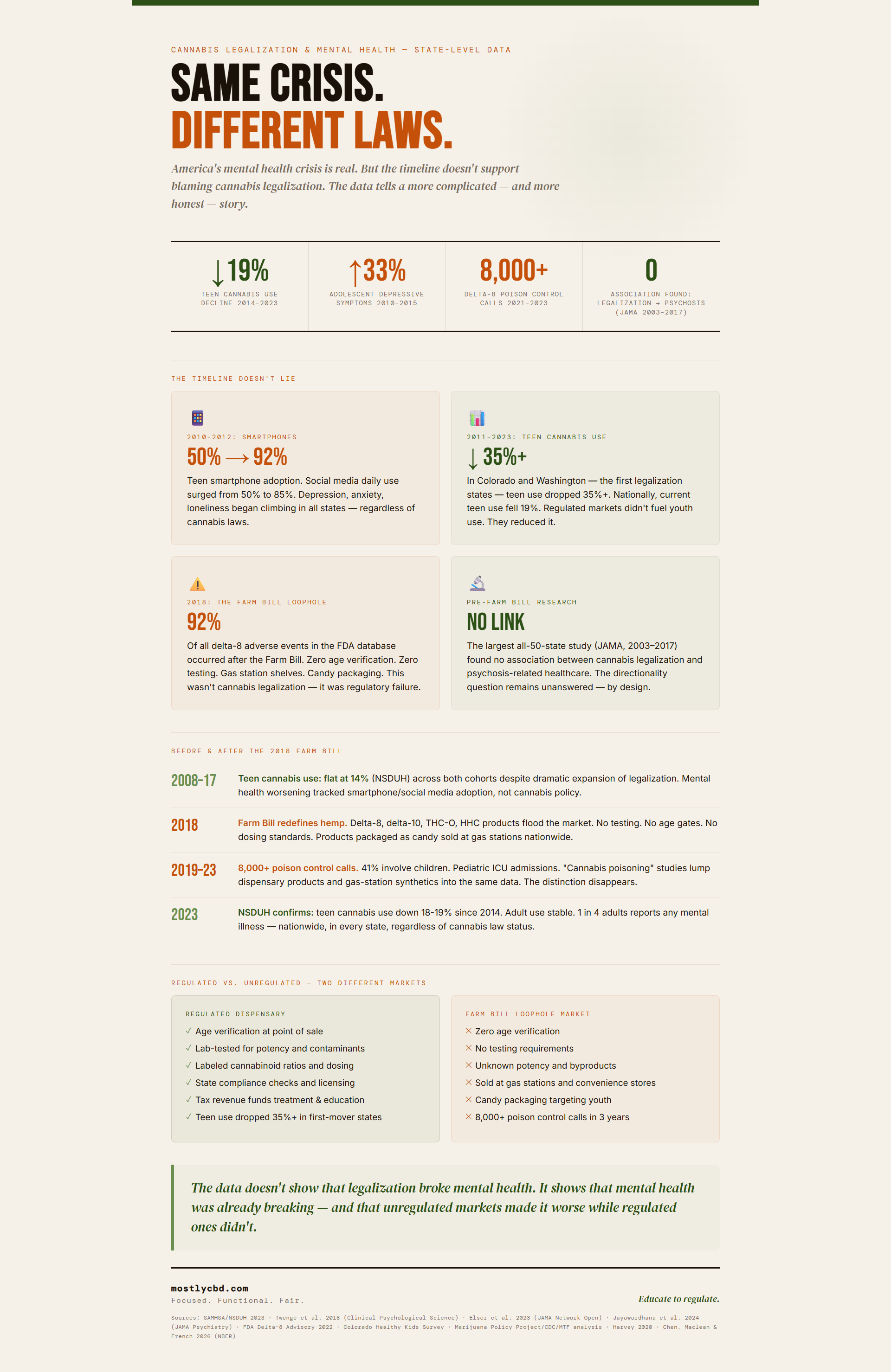
State-level data shows youth mental health declined years before cannabis legalization expanded. The timeline aligns with smartphone adoption, not dispensary openings.
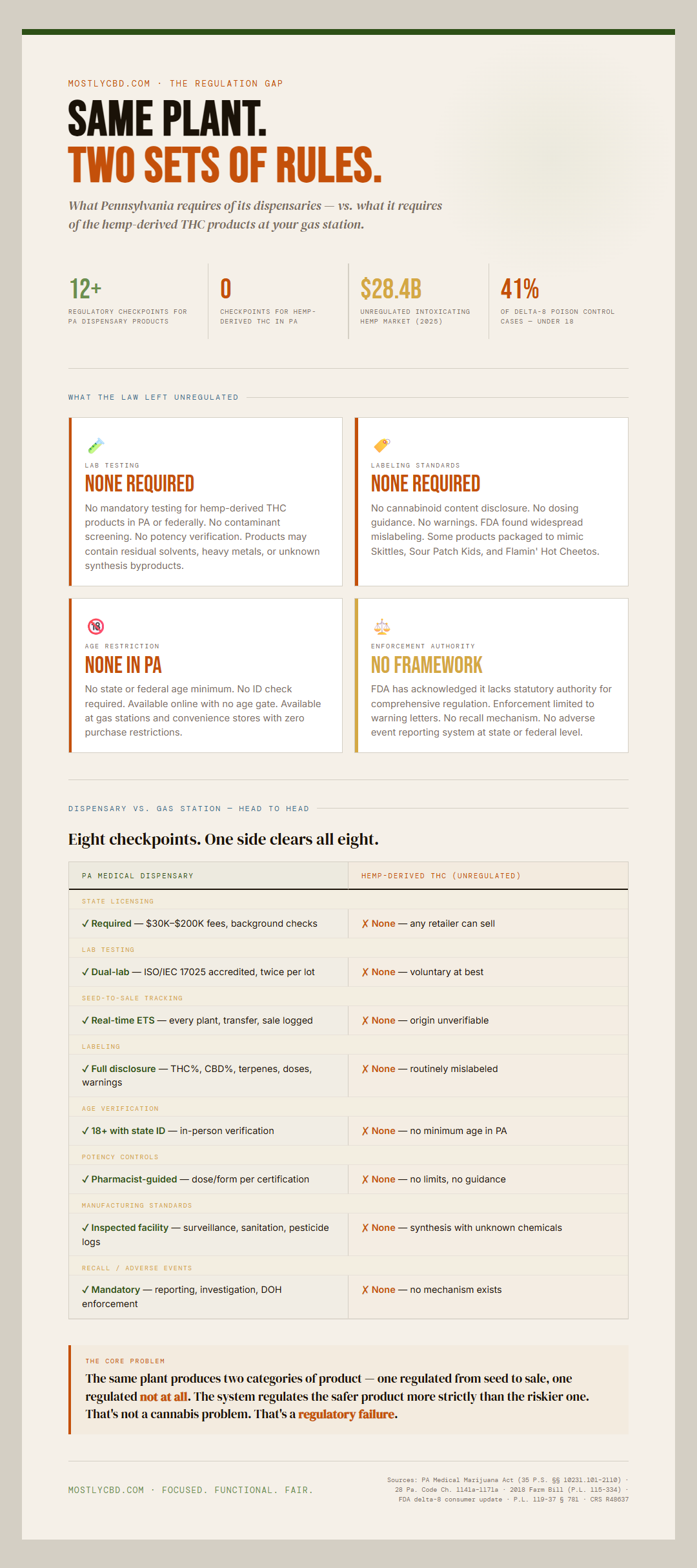
In Pennsylvania, a medical cannabis product clears more than a dozen regulatory checkpoints before reaching a patient. A hemp-derived THC gummy at a gas station clears zero.
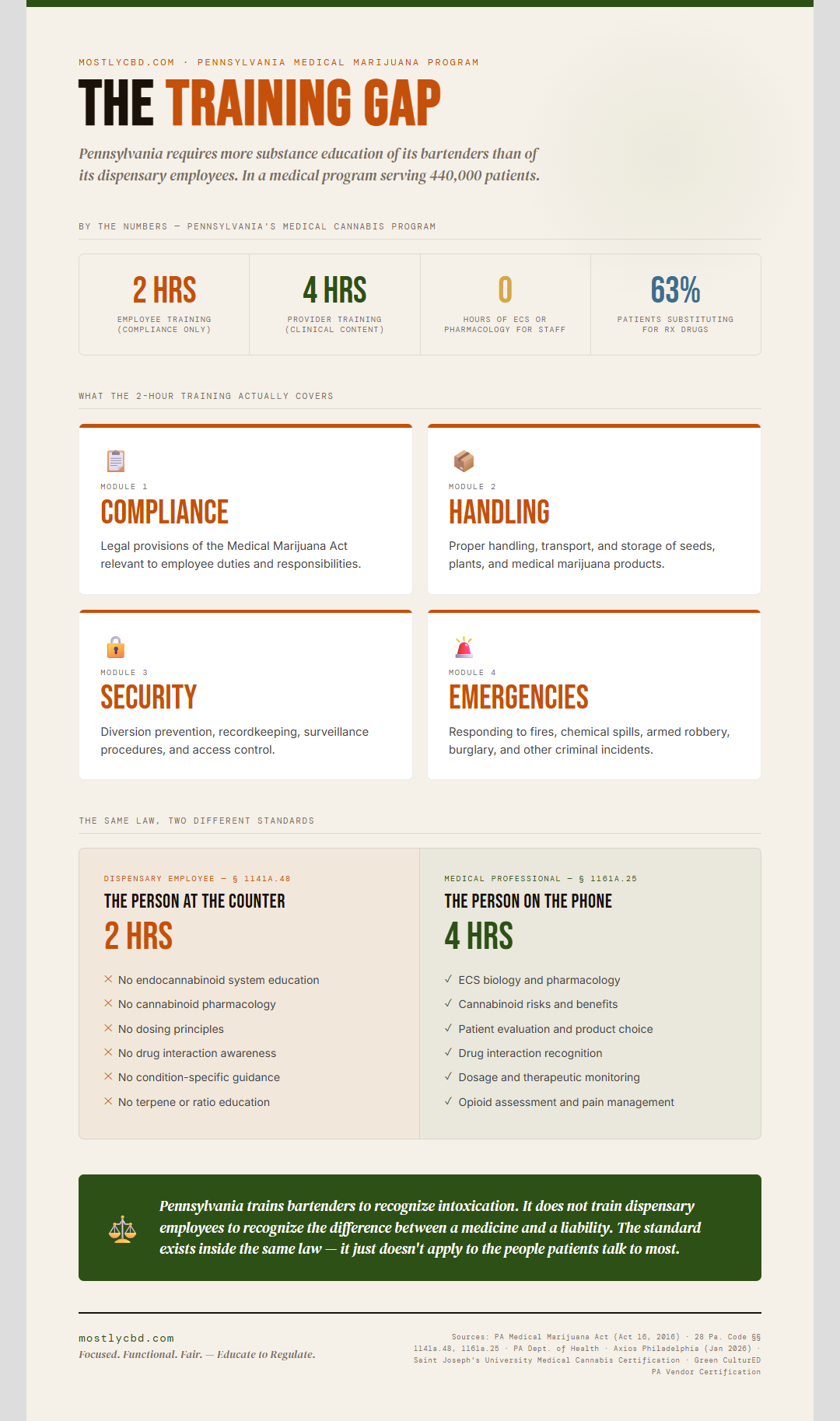
Pennsylvania has 440,000 registered medical cannabis patients. The people dispensing their medicine received two hours of training — none of it clinical.
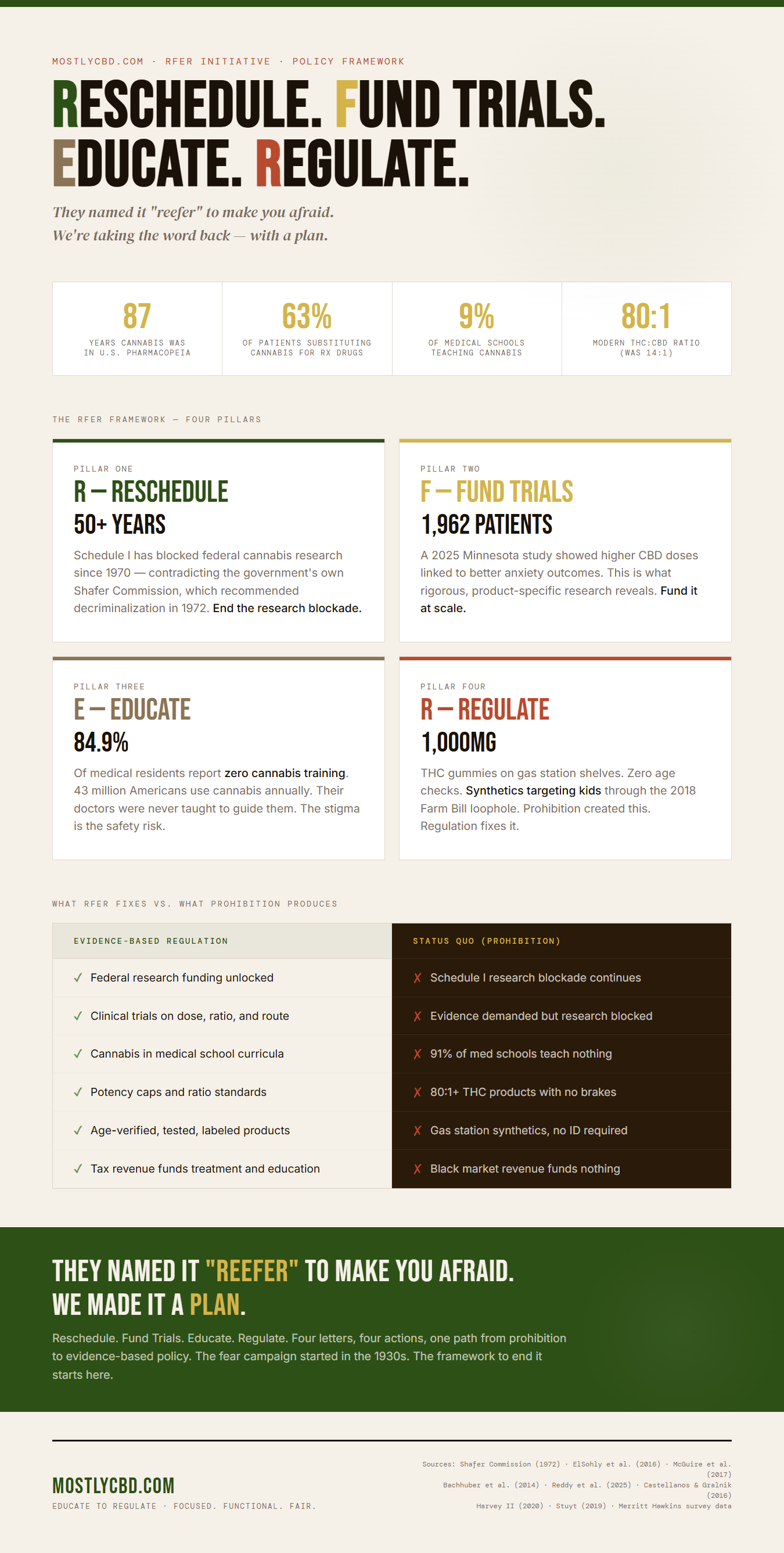
Reschedule. Fund Trials. Educate. Regulate. A clear path from 90 years of manufactured stigma to evidence-based federal regulation.
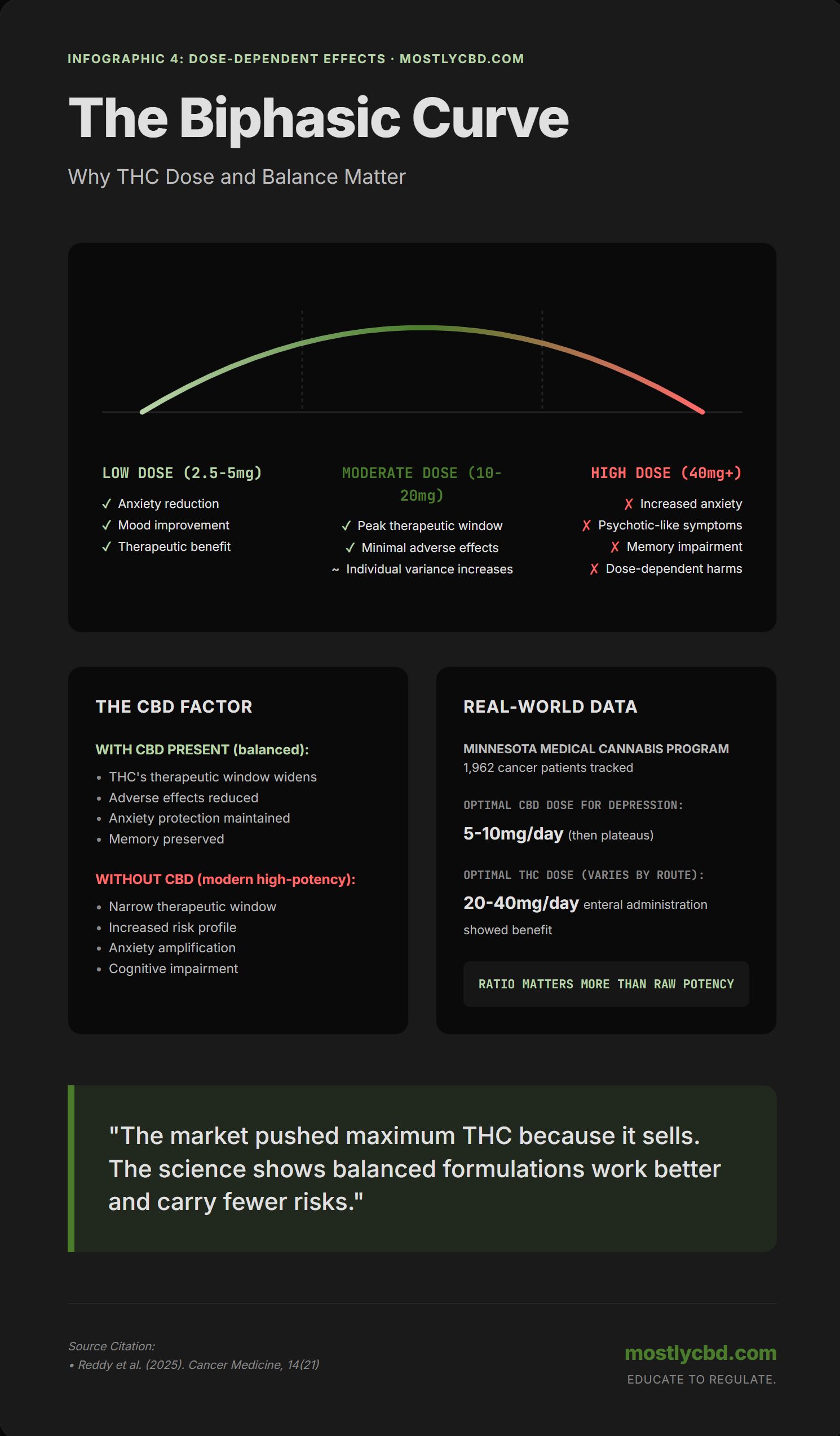
More isn't always better. Low doses of cannabinoids can relieve anxiety and pain, while high doses can amplify the exact same symptoms.
CBD operates on a bell-shaped curve. Efficacy increases with dose up to a point, after which higher doses become less effective. Ratio and spectrum matter.
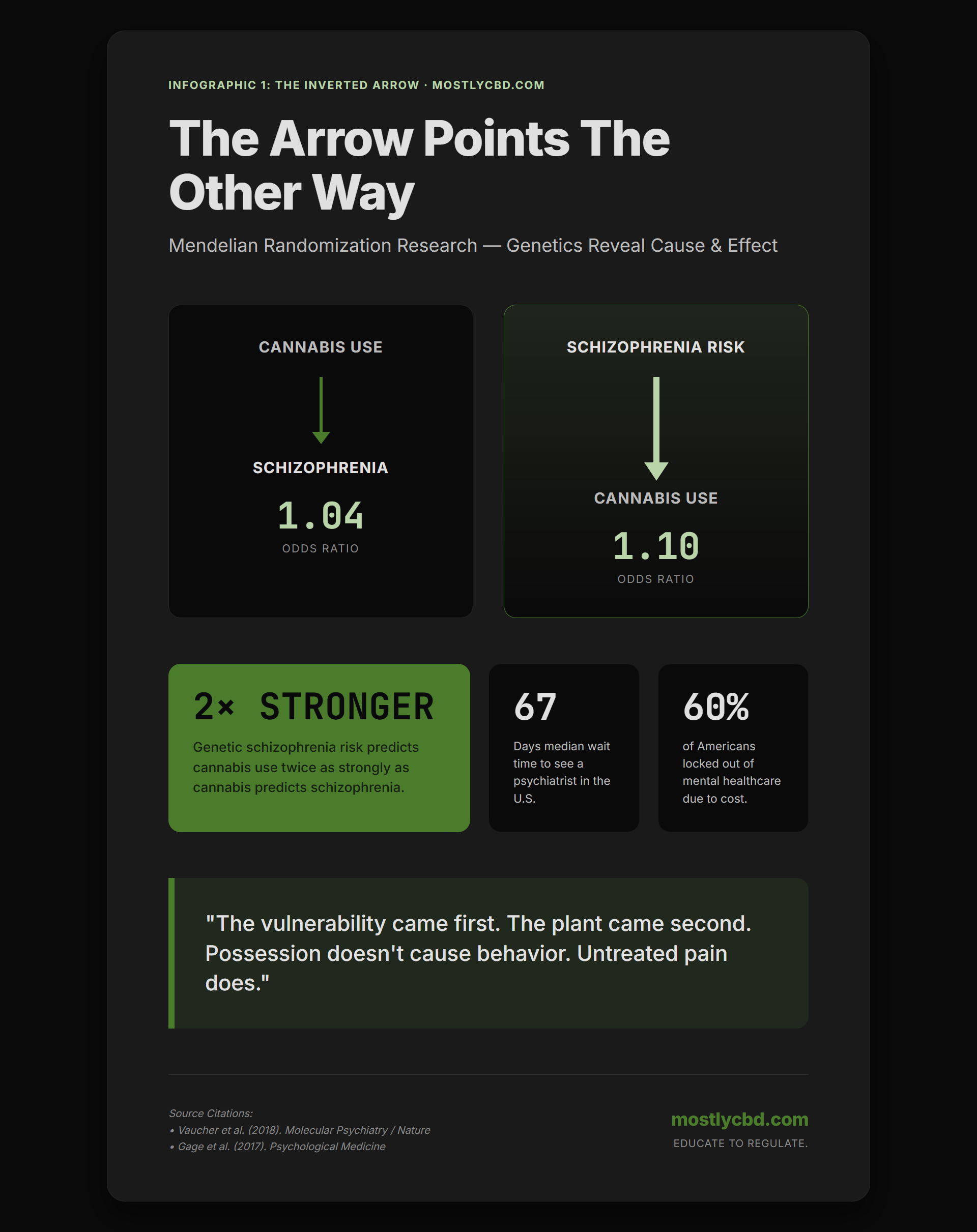
Mendelian randomization data shows genetic vulnerability to schizophrenia predicts cannabis use — more strongly than cannabis predicts schizophrenia.
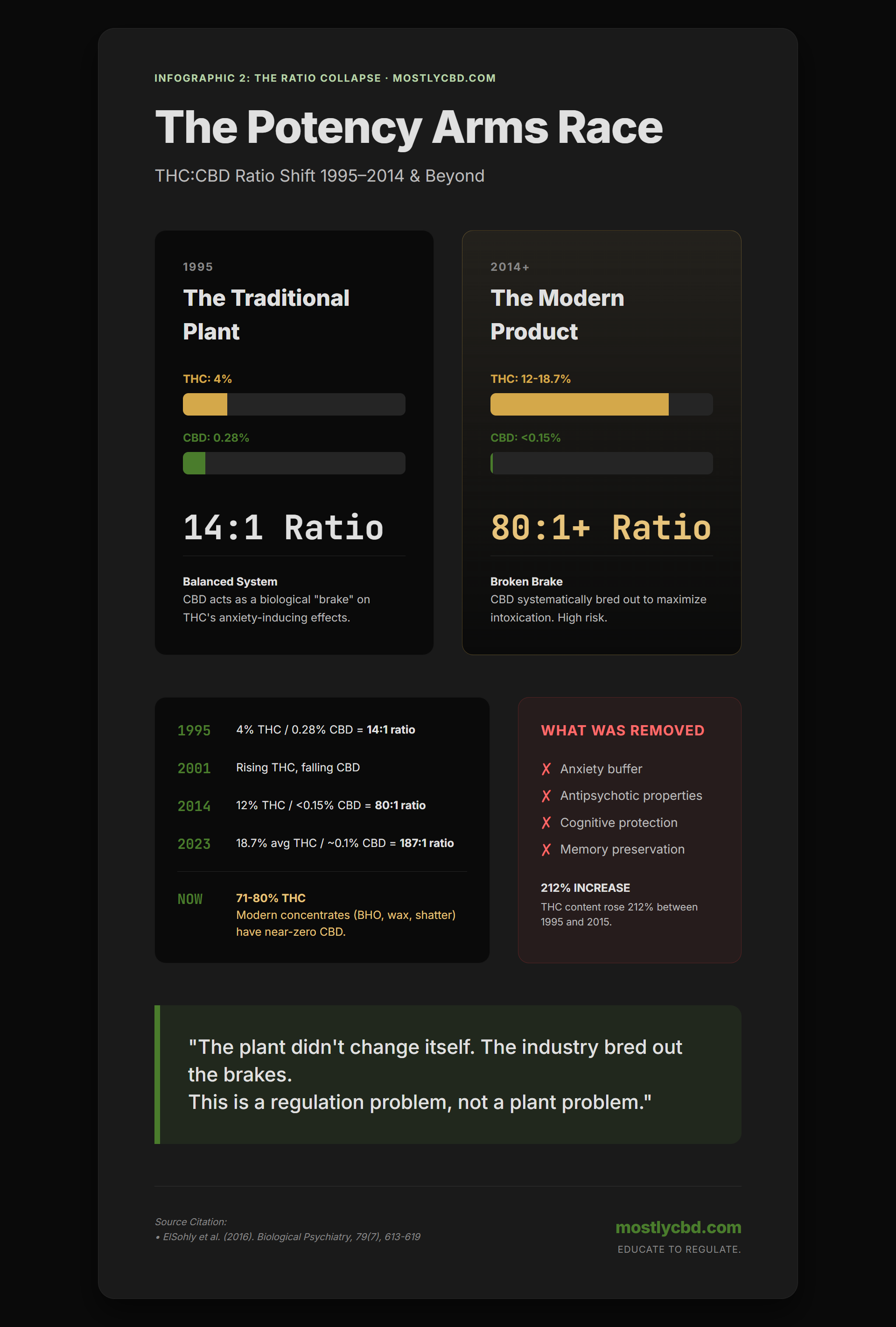
The traditional cannabis plant had a THC-to-CBD ratio near 14:1. Modern commercial products have pushed that past 80:1. The safety valve was bred out.
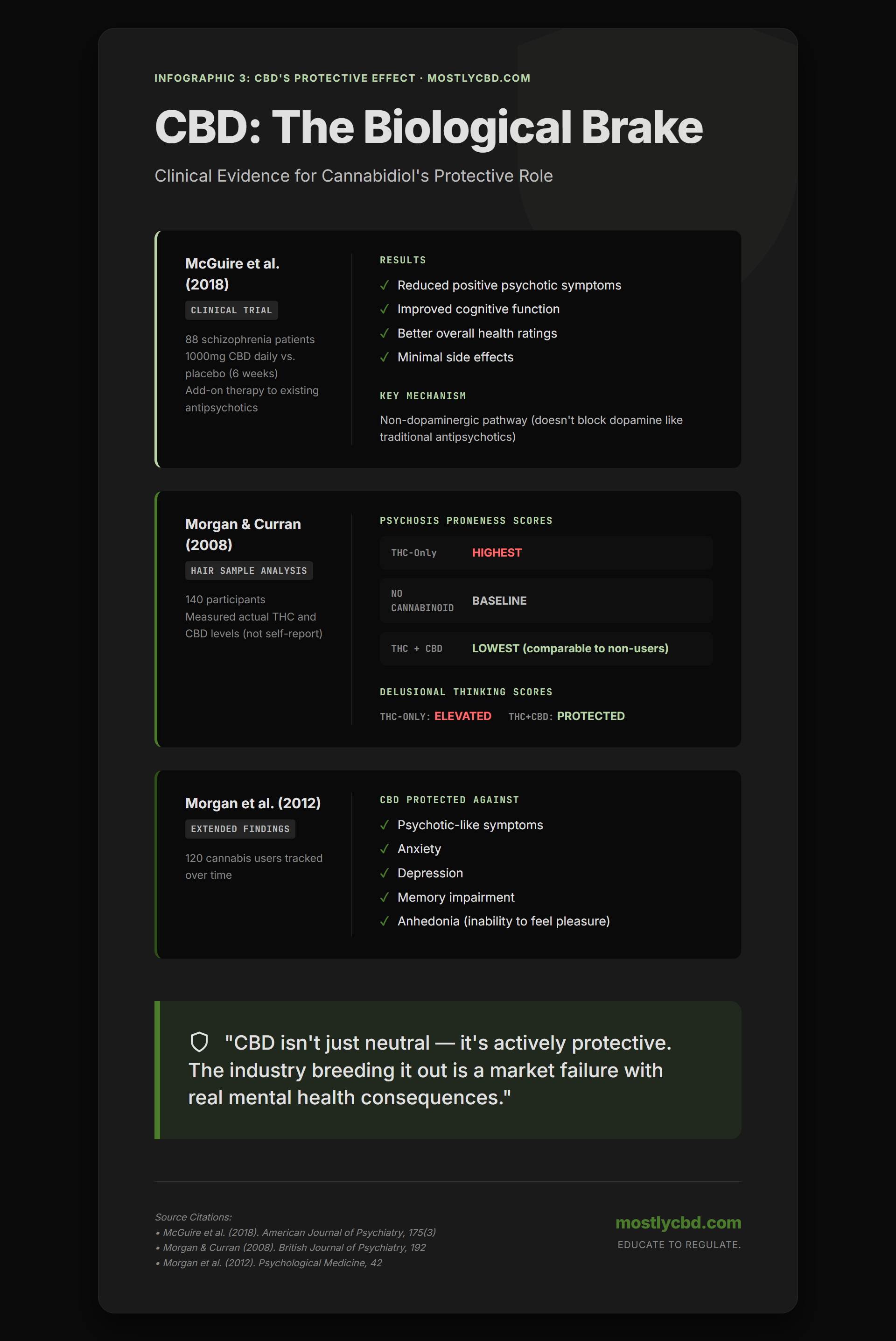
CBD acts as a non-competitive antagonist at CB1 receptors, modulating THC's psychoactive intensity and reducing anxiety side effects.
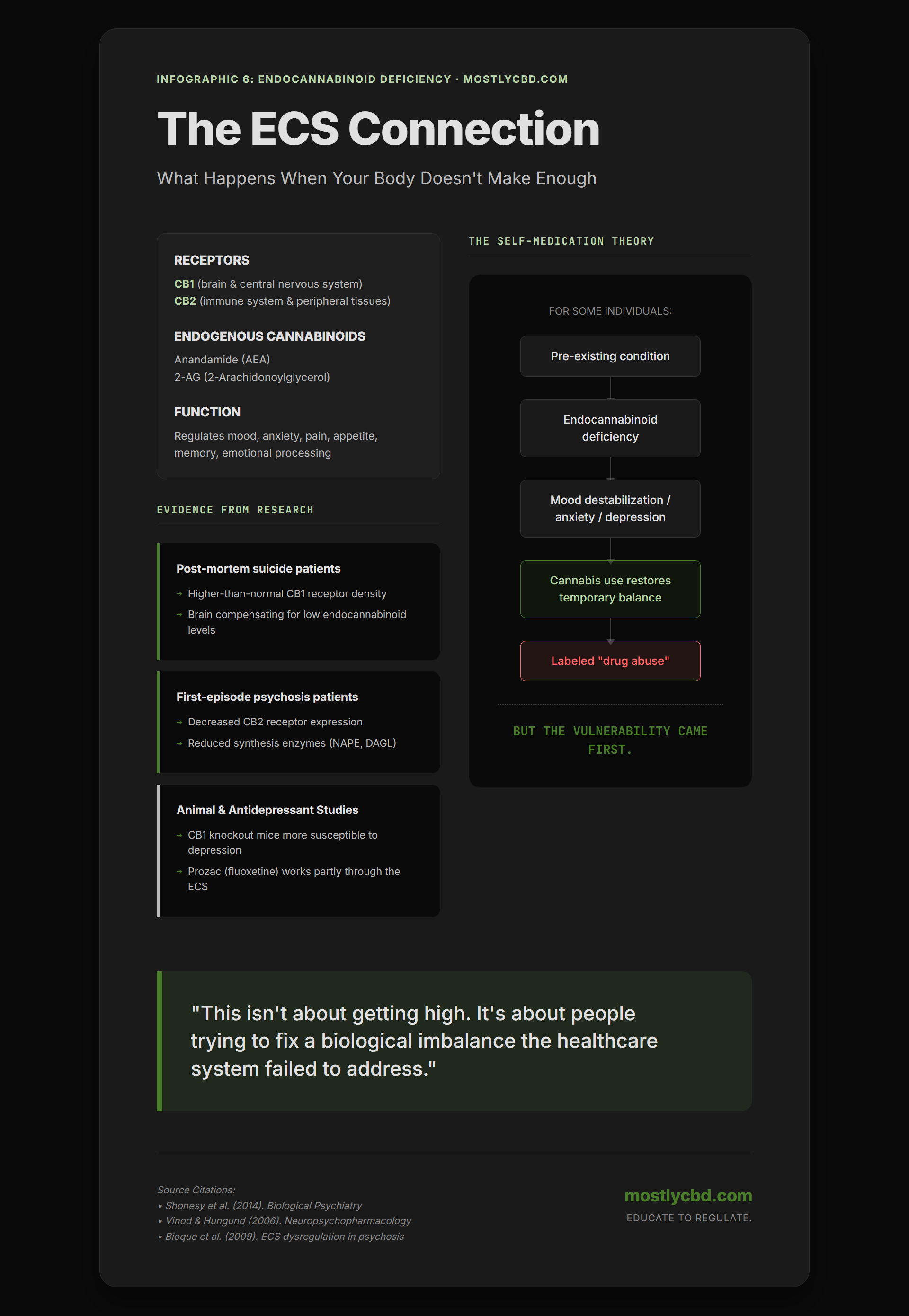
When the endocannabinoid system is disrupted by chronic stress or illness, the results include increased anxiety, depression, and vulnerability to neurological conditions.
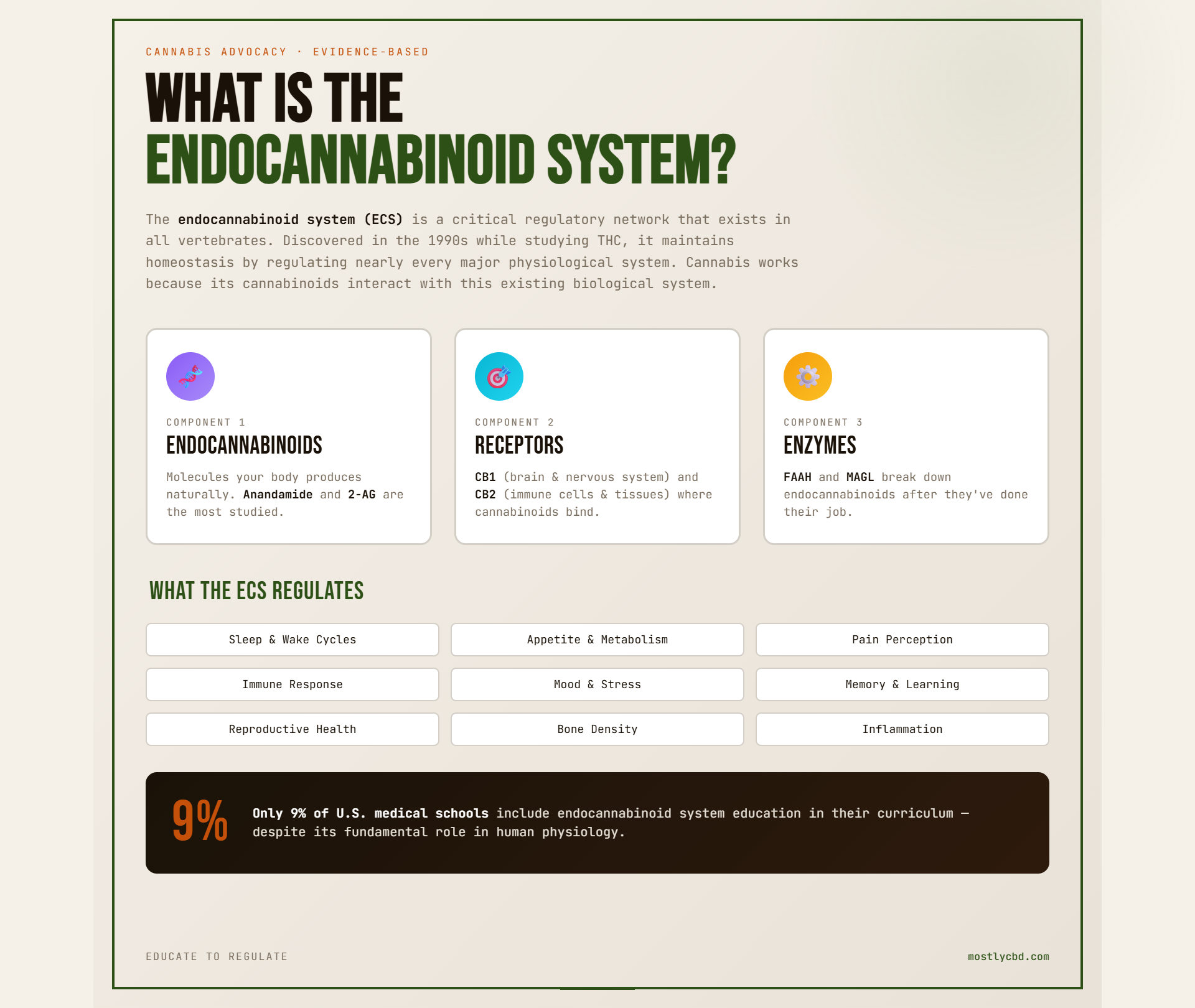
A biological signaling network present in every mammal, regulating homeostasis across multiple systems — pain, mood, memory, appetite, immune response, and inflammation.
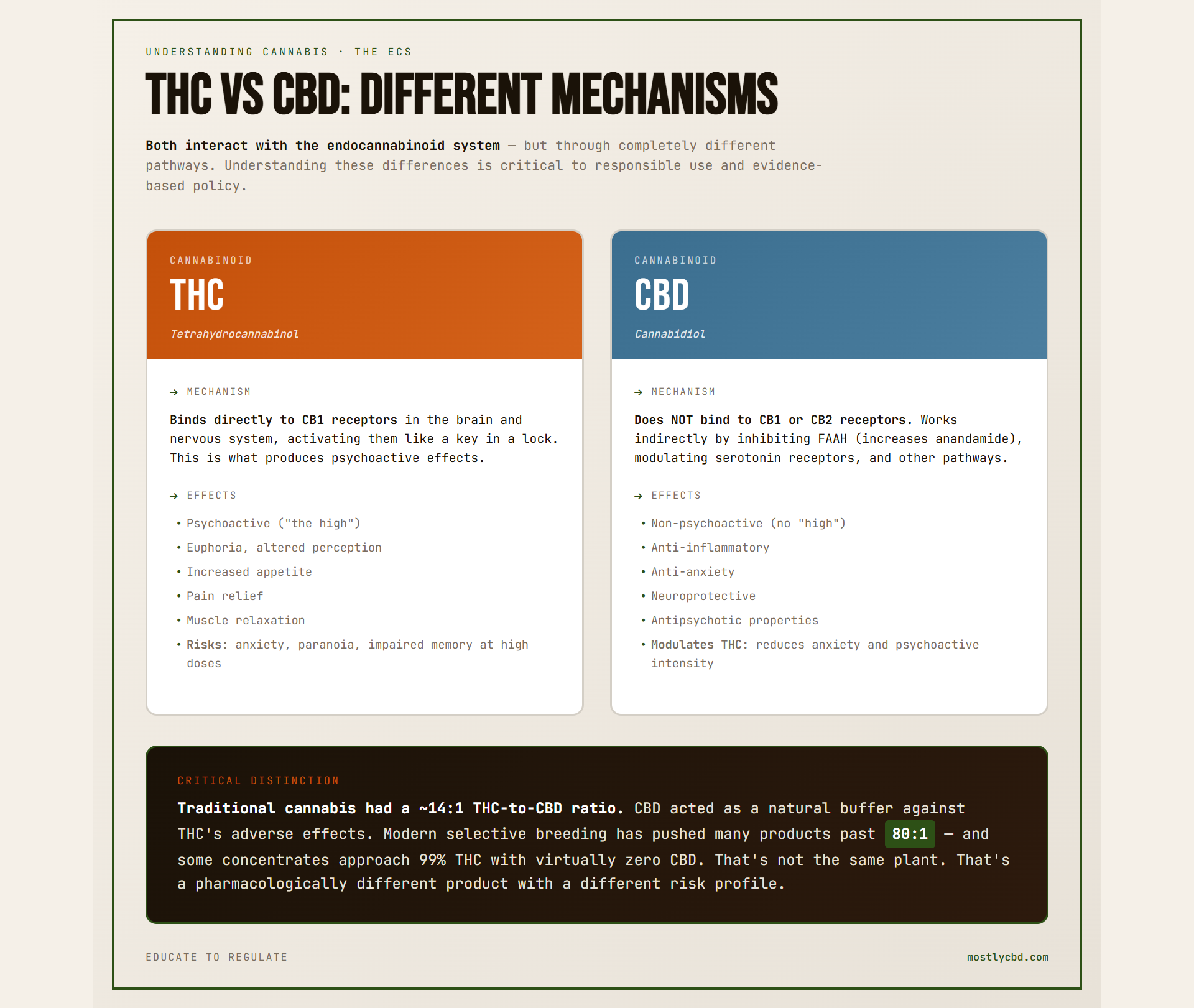
THC binds directly to CB1 receptors as an agonist. CBD acts as an indirect modulator, raising anandamide levels and interacting with serotonin pathways.
The endocannabinoid system is fundamental to human physiology. Yet it is absent from 91% of U.S. medical school curricula, leaving patients to navigate alone.
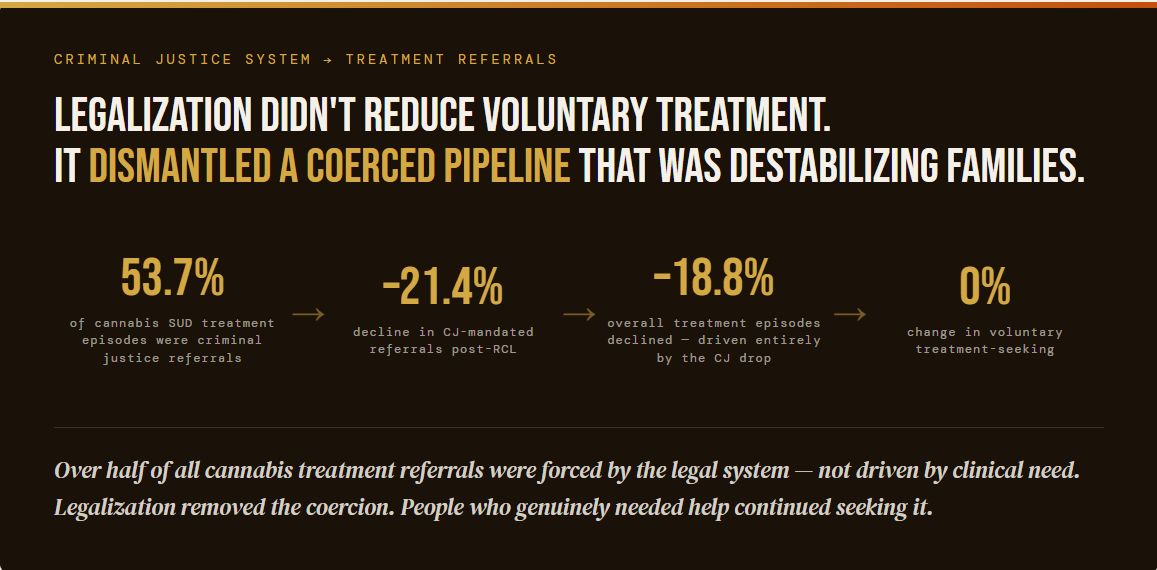
Over half of all cannabis treatment referrals were forced by the criminal justice system.
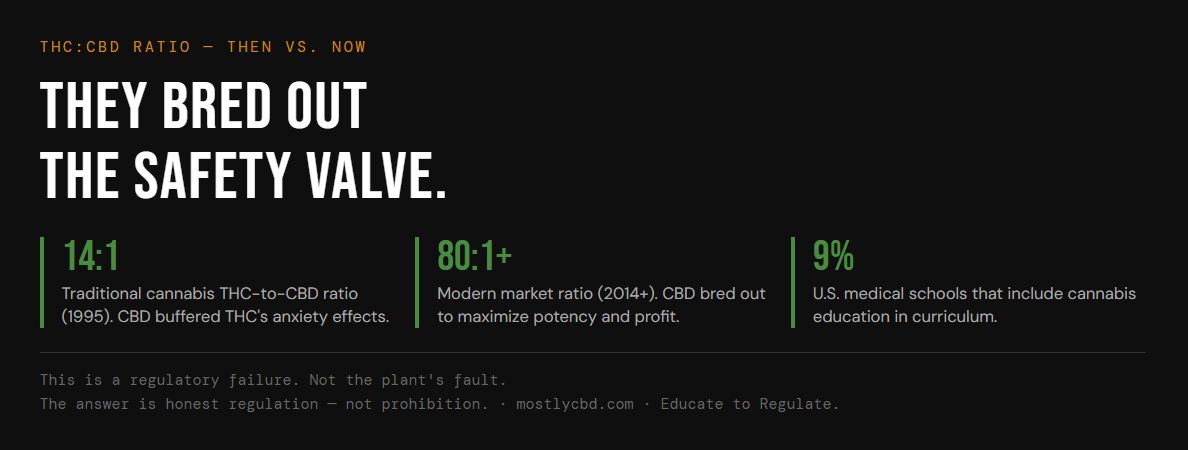
14:1 → 80:1. The ratio shift wasn't an accident — it was a market incentive. CBD is protective. The industry removed it.
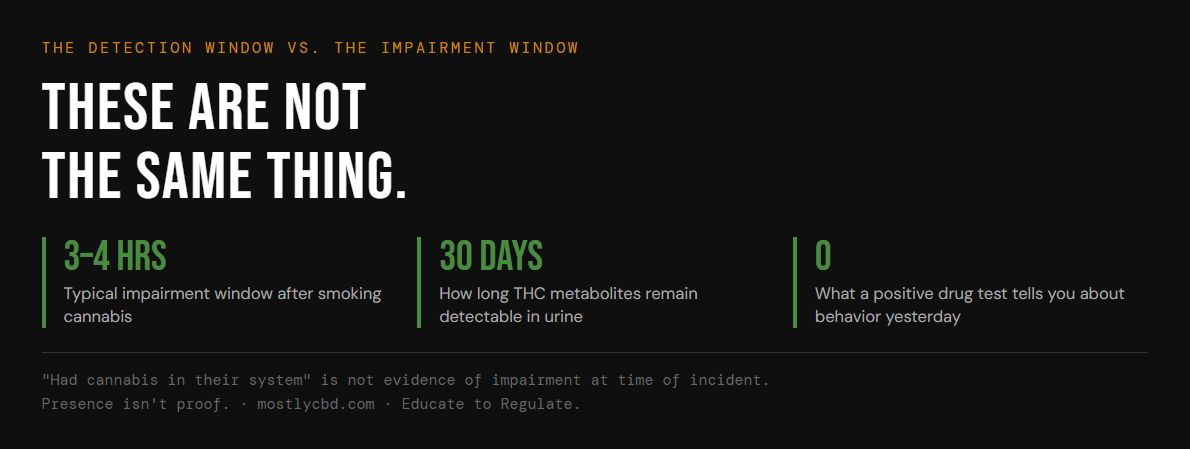
3–4 hrs impairment. 30 days detectable. Zero correlation. Presence in a drug test tells you nothing about behavior yesterday.
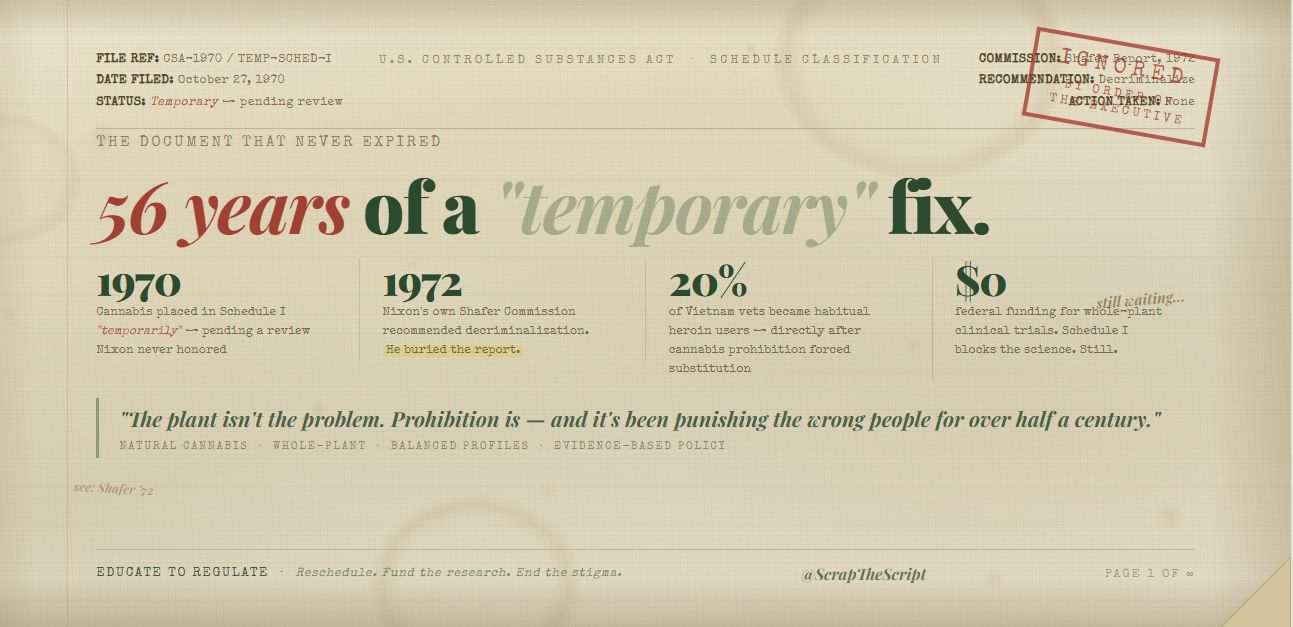
Filed 1970. Status: temporary — pending review Nixon never honored. His own Shafer Commission recommended decriminalization. He buried the report.
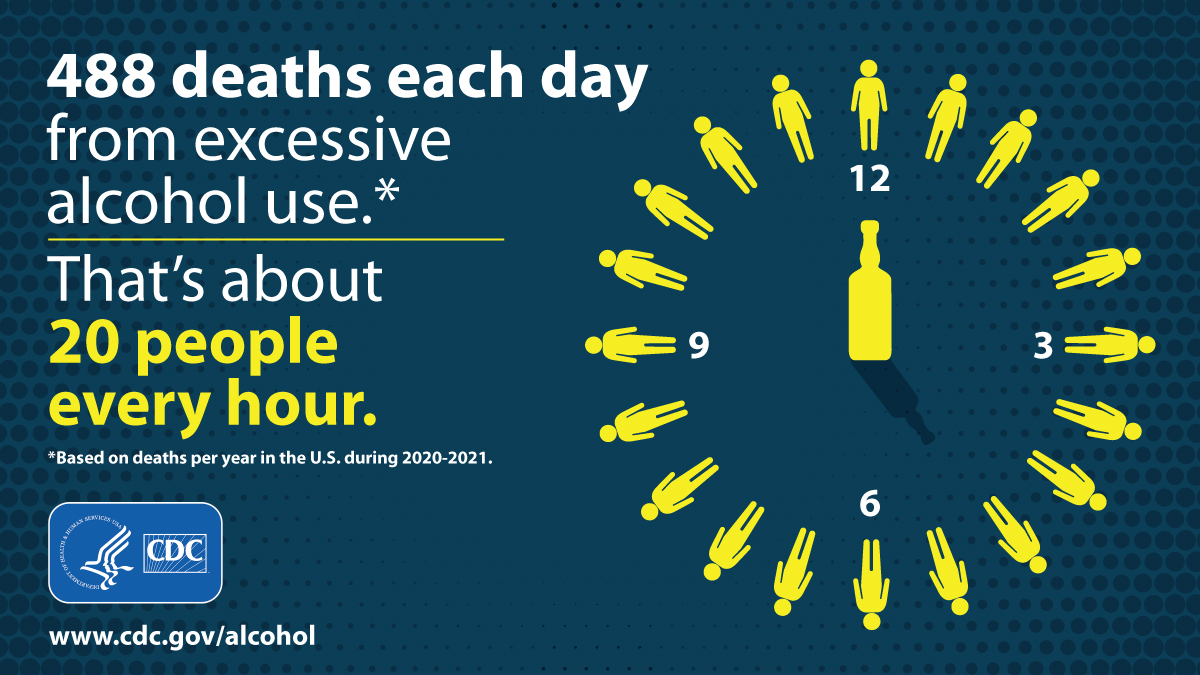
That's 20 people every hour. 2020–2021 U.S. data. Context matters when discussing which substances are regulated and which aren't.
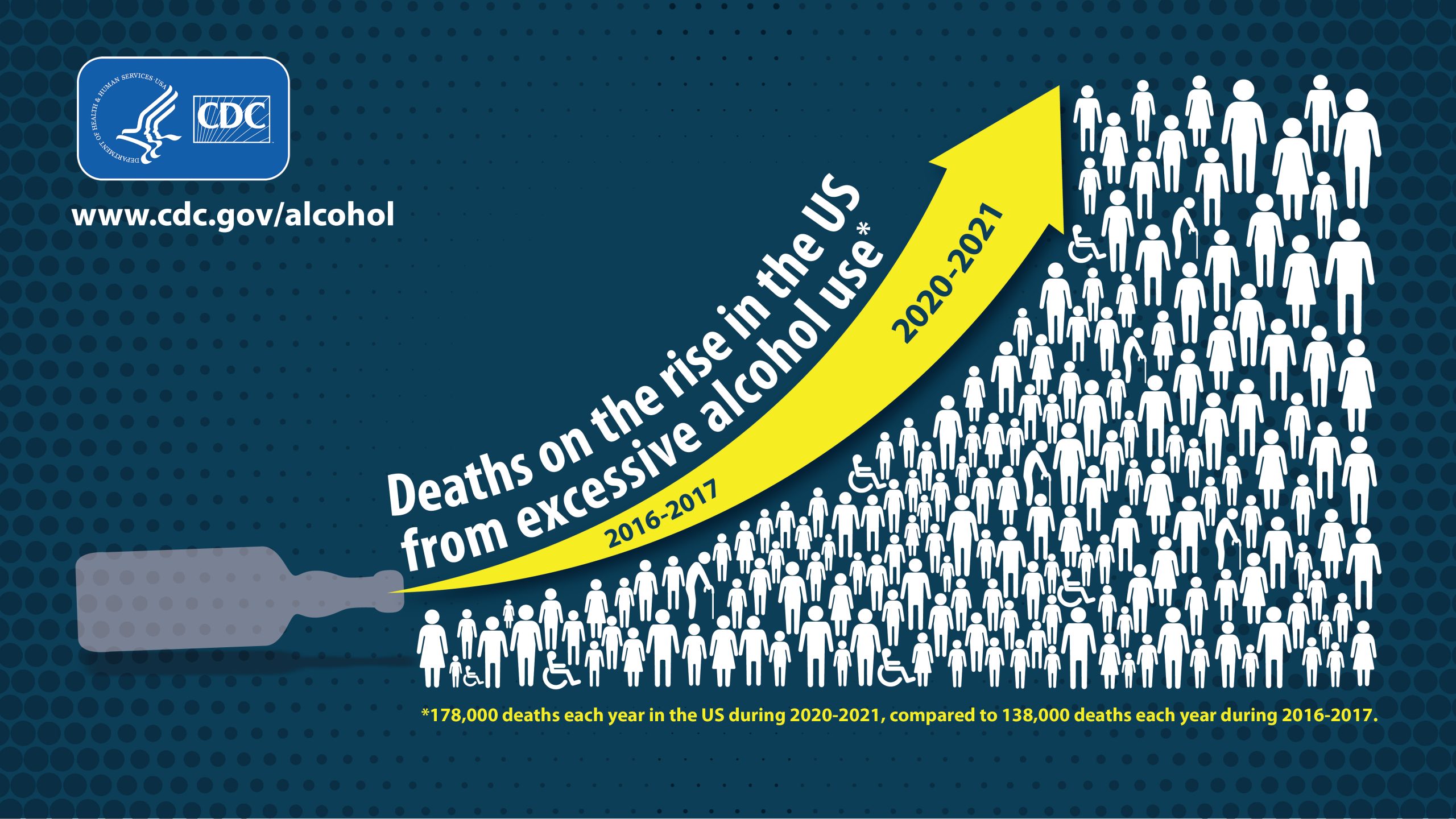
A 29% increase from 2016–17 to 2020–21. The freely available, fully legal substance comparison the policy conversation rarely makes.