Advocacy · Policy Framework
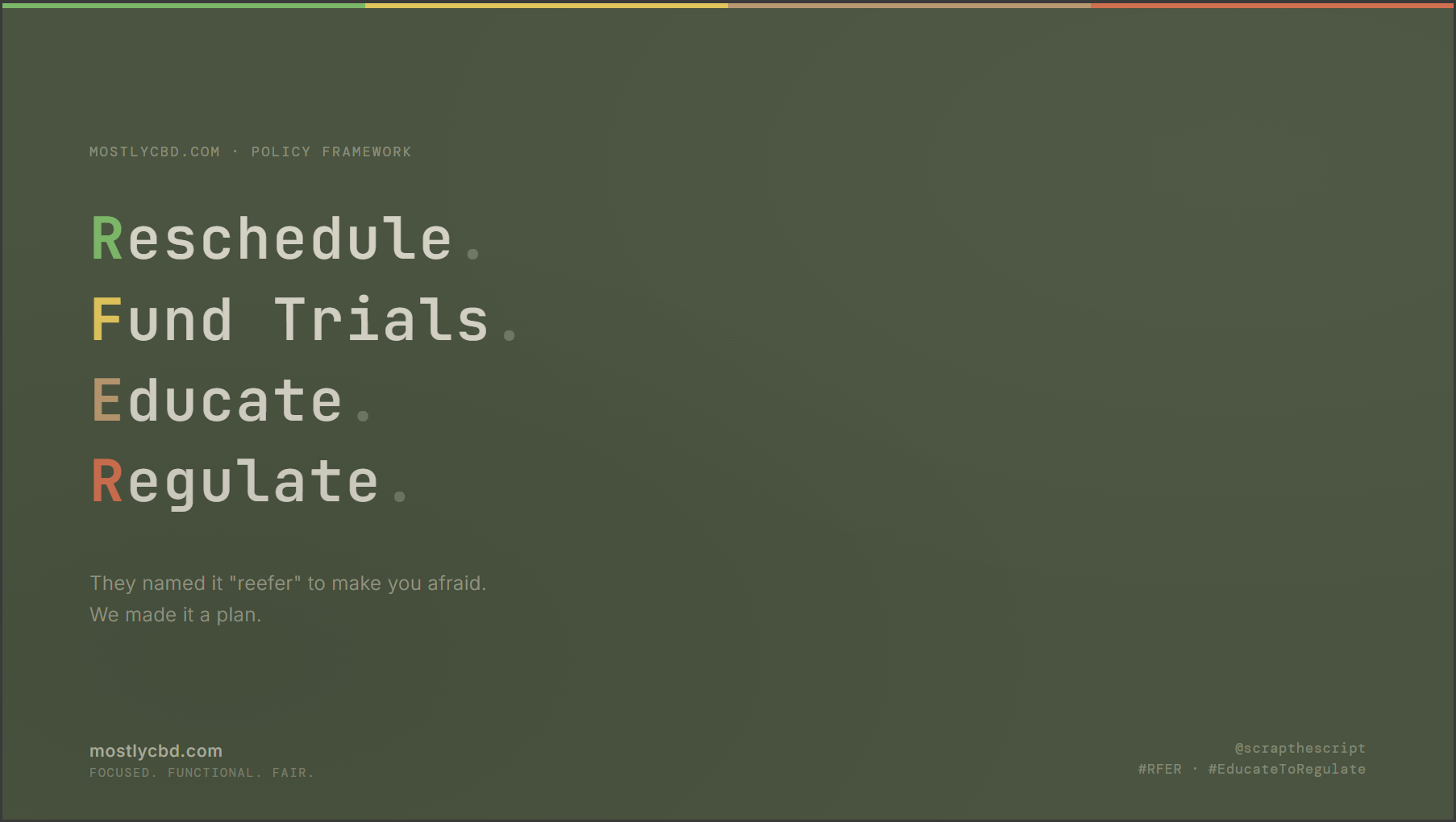
RFER is a four-pillar policy framework for evidence-based cannabis reform. Four letters. Four actions. One path from prohibition to regulation.
In the 1930s, a newspaper baron and a bureaucrat needed a villain. They took a plant that had been in the U.S. Pharmacopeia for 87 years, gave it a foreign-sounding slang name, and ran it through 28 newspapers simultaneously until the fear stuck. That fear became the Marijuana Tax Act. That act became Schedule I. And Schedule I has blocked federal research for over 50 years.
RFER takes the word they built to scare you and turns it into the four things that would actually fix the problem. Not a slogan. A policy platform.
I use a balanced CBD/THC blend to manage chronic neuropathic atrophy and anxiety. Not chasing a high — managing a condition. There's a difference, and that difference is the whole point of this site.
The cannabis conversation has two broken extremes: prohibition-era fear tactics that ignore 80+ years of suppressed research, and a commercial market that bred the brakes out of the plant and calls it progress. Neither one serves patients. Neither one serves the truth.
The traditional plant had a THC-to-CBD ratio near 14:1. Modern commercial products have pushed that past 80:1. CBD is protective — the industry removed it. That's not the plant's fault. It's a regulatory failure, and we should say so plainly.
RFER exists because the path forward isn't prohibition or hype. It's honest information, real science, and policy that follows the evidence. Educate to regulate.
This isn't about being pro-cannabis. It's about being pro-evidence. 90 years of prohibition produced an unregulated market, a research blockade, a medical education gap, and mass incarceration — while cannabis use only increased. The policy failed. The plant didn't.
No ads fund this site. No trackers sell your attention. No third-party cookies. The content stays honest because the shop exists — and because the people wearing RFER are doing more than buying a shirt. They're putting a policy framework on their back and starting a conversation every time someone asks what it means.